KJSEA
KJSEA 2026: A Grade 9 Parent’s Guide to Dates, Scoring, and a Calm Revision Plan
Rehearsal is Friday 23 October 2026; written papers run Monday 26 to Friday 30 October. Forty percent of the placement score is already banked. Here’s a calm plan for dates, scoring, projects, and revision you can actually see.
Last updated: 6 September 2026
When is KJSEA 2026? Rehearsal is Friday 23 October 2026. Written papers run Monday 26 October to Friday 30 October 2026 (morning papers typically from 8:30 a.m.). Project and practical components sit earlier in the year — ask the school what has already been uploaded. Always confirm the final timetable with the school against KNEC’s current circular (knec.ac.ke).
How is the placement score calculated? 20% KPSEA (Grade 6, already banked) + 20% school-based assessment across Grades 7–8 + 60% KJSEA. Results on the slip use performance descriptors (EE / ME / AE / BE and sub-levels), not an old KCPE-style newspaper ranking.
What does KJSEA decide? Senior School pathway placement from 2027 for this cohort — STEM, Social Sciences, or Arts and Sports Science — based on the combined score and strengths across learning areas. It is a placement tool, not a pass-or-fail life sentence.
KJSEA 2026 is close enough to plan for and far enough that panic still wastes time. Forty percent of the placement score is already banked. The job now is a calm written week, finished projects, and revision you can actually see.
What KJSEA actually is
KJSEA — the Kenya Junior School Education Assessment — is the national assessment KNEC sits every Grade 9 learner through at the end of junior school. It was first sat in 2025, so 2026 is only the second national sitting. If the rhythm still feels unfamiliar, that is normal. Most Grade 9 parents are learning it with you.
Junior school (Grades 7–9) sits in the middle of Kenya’s CBC / CBE structure. KJSEA closes that stretch and opens the door to Grade 10 and Senior School pathways. It is not an isolated hurdle dropped from nowhere. It is the planned checkpoint after three years of continuous, competency-based work.
For the official assessment framework, start at knec.ac.ke and whatever circular your school shares. News roundups of the 2026 timetable are useful for planning, but the school’s copy of the KNEC timetable is what the child must follow on the day.
2026 sitting at a glance
| Milestone | When (2026) | What parents should do |
|---|---|---|
| Projects / practicals | Earlier in the year (e.g. Creative Arts & Sports project window commonly reported May–July; Agriculture and Pre-Technical Studies projects commonly reported in July) | Ask the school what has been completed, marked, and uploaded. Do not revise only for written papers. |
| Rehearsal | Friday 23 October 2026 | Treat it as a real school day: timing, materials, no phones, calm morning routine. |
| Written papers | Mon 26 – Fri 30 October 2026 | Subject-by-subject week. Morning sessions commonly start 8:30 a.m. Arrive early. |
| After papers | Results / admin later | Placement uses the combined score. Watch for the school’s results-slip briefing, not rumour in parent groups. |
Written week shape (as widely republished from the 2026 timetable — confirm with school):
| Day | Date | Typical papers |
|---|---|---|
| Mon | 26 Oct | English Language; English Composition & Literary Analysis |
| Tue | 27 Oct | Kiswahili Lugha / Kenyan Sign Language; Kiswahili Insha (or KSL paper 2) |
| Wed | 28 Oct | Mathematics; Agriculture |
| Thu | 29 Oct | Integrated Science; Social Studies; Creative Arts and Sport |
| Fri | 30 Oct | Pre-Technical Studies; Religious Education (CRE / IRE / HRE); further Integrated Science session as on the official timetable |
Special papers for hearing-impaired and braille candidates run on adjusted durations. The school will know which version applies.
If an older article (including an earlier version of this page) said the window ran “to 20 November,” treat that as outdated for the written sitting. Keep November in your head only for whatever results or admin steps the school announces — and label those separately from exam week.
How the placement score is calculated
The number that matters for Senior School is not “the KJSEA paper alone.” It is three parts:
- 20% from KPSEA — the Grade 6 assessment already sat. Locked in.
- 20% from school-based assessments — continuous work across Grades 7 and 8 (tests, projects, classwork already on record).
- 60% from KJSEA — the 2026 sitting across the junior-school learning areas, including project/practical components where required.
KJSEA results are not ranked school-by-school the way old KCPE league tables were. There is no newspaper crown for “top school in the county.” The job is placement into a pathway, not crowning a winner.
How results are reported on the slip
Public explainers summarizing KNEC’s KJSEA reporting describe an 8-level scale per learning area. Schools issue slips with these kinds of descriptors. Use the slip your school gives you as the source of truth.
| Band | Levels (common codes) | Points per learning area (as widely reported) |
|---|---|---|
| Exceeding Expectation | EE1, EE2 | 8, 7 |
| Meeting Expectation | ME1, ME2 | 6, 5 |
| Approaching Expectation | AE1, AE2 | 4, 3 |
| Below Expectation | BE1, BE2 | 2, 1 |
Nine learning areas × a maximum of 8 points is commonly described as a 72-point ceiling for the KJSEA aggregate language on the slip. That KJSEA picture then feeds the 60% slice of the wider placement score, alongside KPSEA and school-based assessment.
We are not inventing cut-scores for pathway cut-offs here. Pathway thresholds and school categories shift with policy and year. Ask the school how they will brief parents when slips are released.
What the results actually decide
The combined placement score helps determine which Senior School pathway a learner enters from 2027 for this cohort:
- STEM
- Social Sciences
- Arts and Sports Science
Nine learning areas span languages, mathematics, sciences, social studies, and the practical and creative subjects of junior school. A balanced picture supports a wider fit. A lopsided picture narrows options. That is an argument for balanced revision, not for fear.
Pathway placement is not a life sentence and not a verdict on a child’s worth. Three routes through Senior School can each lead to real further study and real work. The purpose is fit.
Because KJSEA is still new, parent WhatsApp groups fill gaps with rumour. Lean on fixed pieces: dates, 20/20/60 weights, three pathways, and the school’s circulars.
The honest implication: recoverable, not everything
Forty percent of the eventual placement score is already banked. KPSEA is finished. Two years of school-based assessment are on record. Nothing in the October hall changes those two fifths.
That cuts both ways. A shaky August mock is not destiny. A learner with strong banked marks needs a steady October, not a frantic one. A learner with weaker school-based marks has more reason to make the 60% count — and cramming in the last week still is not how that happens. A plan is.
Put energy where it can still move: finished projects, repaired foundations, and calm written-week prep.
Projects and practicals parents forget
Written papers get the WhatsApp panic. Project windows often do not.
Ask the school, in writing if needed:
- Which project / practical components count for KJSEA this year for your child?
- What is already completed, marked, and uploaded?
- What still needs a home push before the school’s deadline?
Creative Arts & Sports, Agriculture, and Pre-Technical Studies are the areas parents most often discover late. A strong written week cannot fully rescue a missing project the school was meant to upload months earlier. Put this conversation on the calendar before September revision intensifies.
A month-by-month plan toward the October written week
Built backwards from 26–30 October 2026, with rehearsal on 23 October.
- July — find the gaps first. Before adding new topics, run a diagnostic across the learning areas that matter for your child. The goal is a map, not a scare score. Kitabu AI’s free diagnostic takes about 15 minutes and points Term 3 work strand by strand.
- Late July–August — repair before you extend. Fix old foundations (often Grade 7–8 ideas) before chasing new Grade 9 chapters. A shaky fraction skill will block later maths no matter how many new pages you cover.
- September — weekly practice with feedback. Rotate subjects. A quiz without feedback is busywork. A quiz that names the next repair is progress. Keep project follow-ups with the school alive in parallel.
- Any school break — keep skills warm. Short, consistent home sessions beat a cold restart. See holiday revision in Kenya for a parent-led frame.
- Early–mid October — steady, not frantic. Revisit weak September topics. Stop introducing genuinely new material after the first week of October. Use the days before 23 October for routine, sleep, and materials — not a new textbook.
- 23–30 October — rehearsal then papers. Protect sleep. Arrive early. No phones in the room. Trust the work already done.
What a good week actually looks like
A workable Grade 9 week is a handful of short weekday sessions plus one slightly longer weekend block on the weakest topic — not one heroic Sunday. Bounded start and end. A one-line note of what landed. Open books “just in case” after focus has gone is not revision.
For maths-heavy worry, see CBC mathematics revision and when a child is failing maths. For the wider junior-school spread, see junior school CBC revision.
Mistakes vs fixes
| Mistake | Fix |
|---|---|
| Buying more books before finding the gap | Diagnostic first; buy only for a named weakness |
| Ignoring projects until written week | Ask the school now what is uploaded vs outstanding |
| All-night cramming after 20 October | Steady September; taper in October; protect sleep |
| Treating one bad mock as destiny | Use it as a fortnight map; remember 40% is already banked |
| Comparing to a sibling or neighbour | Each child’s banked mix differs; comparison adds pressure, not marks |
| Nightly “umesoma?” interrogations | One specific weekly update beats seven empty yeses |
Keeping revision visible without nightly interrogation
Most parents do not want to grill a Grade 9 learner every evening. They want to know whether revision is real. “Umesoma?” only ever returns “yes.”
A better habit: one short, specific weekly picture — what improved, what is still stuck — while there is still time to act. That is the Friday WhatsApp idea in is my child really revising.
If you also have a Grade 6 learner, the KPSEA Grade 6 revision guide covers the earlier assessment that still sits inside this same placement story.
Where Kitabu fits (after the plan)
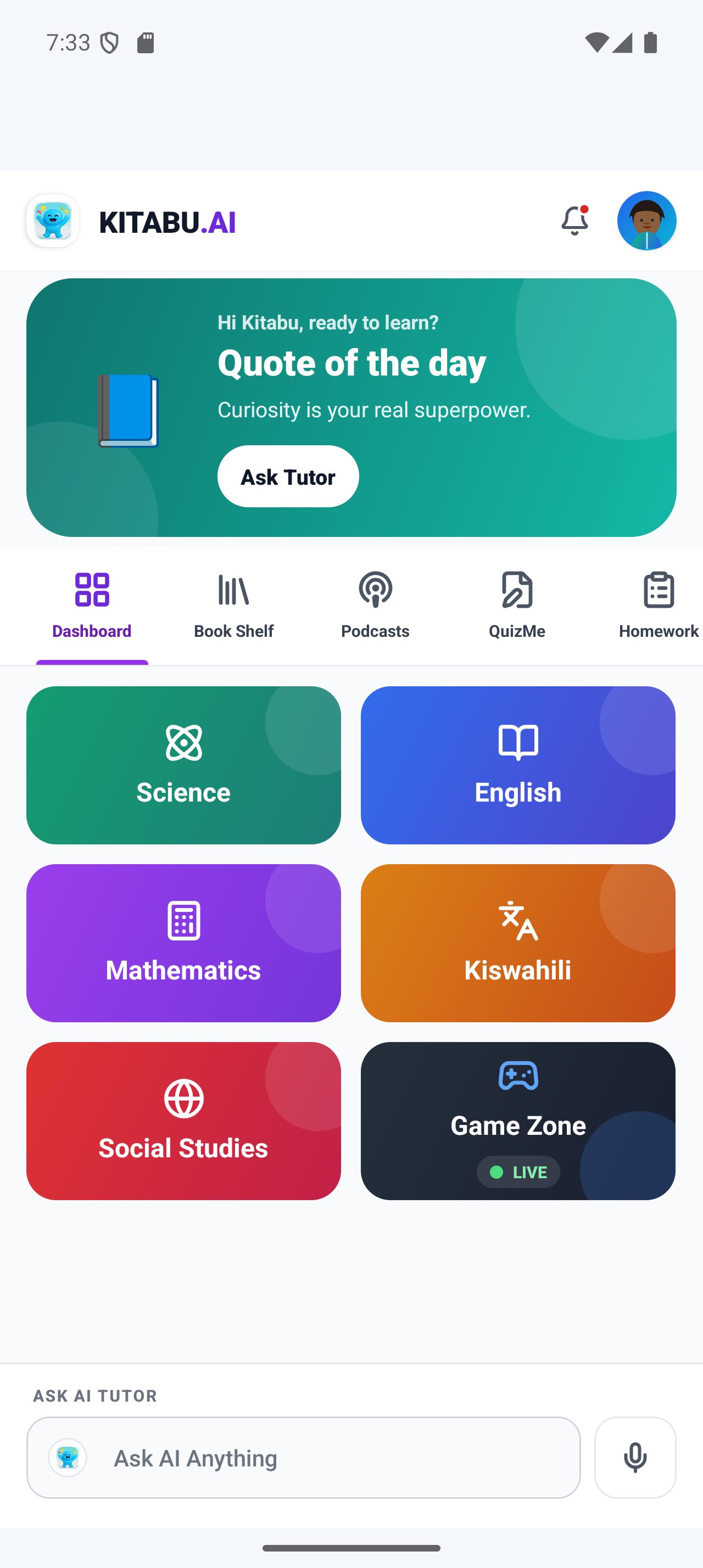
Kitabu AI is a CBC-aligned tutor for Kenyan learners in Grades 1–12 (this article’s audience is Grade 9 parents). English and Kiswahili. Step-by-step help plus practice. A free diagnostic to find the real starting point. Parent dashboard plus a Friday WhatsApp progress update.
Discounted season pricing
| Plan | List | Current |
|---|---|---|
| Monthly | KSh 250 | KSh 100 / month |
| Termly | KSh 500 | KSh 250 / term |
| Premium | — | KSh 999 / term |
1-month free trial for all students. M-Pesa when you continue. Cancel anytime.
KJSEA, KPSEA, and KCSE revision past papers are included from the KSh 100/month plan — not a separate add-on.
Android is live on the Play Store. iOS and web are coming soon. Full packages on /pricing. Start from /download.
Kitabu does not replace the teacher or guarantee a pathway. It is nightly guided practice you can see.
If you want Term 3 to start from a real map of strengths and gaps, run the free diagnostic, then decide. Questions: WhatsApp +254 716 175 485 or +254 010 886 5757, or hello@kitabu.ai.
Common questions
When is KJSEA 2026?
Rehearsal is Friday 23 October 2026. Written papers run Monday 26 October to Friday 30 October 2026. Projects and practicals sit earlier in the year — confirm with the school. Cross-check KNEC and the school’s timetable copy before you treat any news table as final.
How is KJSEA scored for placement?
20% KPSEA + 20% Grades 7–8 school-based assessment + 60% KJSEA. The KJSEA slip uses performance levels (EE / ME / AE / BE and sub-levels) with points language commonly totaling up to 72 across nine learning areas. The school will explain the slip when it is issued.
What do EE1, ME2, BE1 mean on the results slip?
They are performance descriptors, not old A–E letter grades. EE is exceeding expectation, ME meeting, AE approaching, BE below — each split into two sub-levels in the common 8-level reporting pattern. Read the school’s key with the slip.
Is KJSEA ranked like KCPE was?
No. It is a placement assessment, not a newspaper league table.
What does KJSEA decide?
Senior School pathway placement (STEM, Social Sciences, or Arts and Sports Science) from 2027 for this cohort, using the combined score and subject strengths.
Are KJSEA past papers in the KSh 100 plan?
Yes. On Kitabu, KPSEA, KJSEA, and KCSE revision past papers are included from KSh 100/month.
Where do I download Kitabu?
Android is live on the Play Store (ai.kitabu.app) or at kitabu.ai/download. iOS and web are coming soon.